A woman in a traditional red dress holding a young girl in a green dress at Finca Auromar, a man in red cap behind
From the source

Panama

Direct trade

We have bought coffee from Panama for many years. Our sourcing includes microlots—small, separately kept batches from a single farm or plot—from Boquete and Volcán. These relationships span family farms, experimental processing and a project working to pay local growers more for their cherries.

Altitude
~700 – 2,000+ m
Highland harvest
From ~December
Key region
Chiriquí (~two-thirds)
Signature variety
Geisha (Gesha)
With Bird Rock
For many years

Nothing from Panama is roasting right now. You can still read about the coffees we've had from here below.

Who we buy from

The farms, families and cooperatives behind our Panama coffees.

Hacienda La Esmeralda — the Peterson family

We have purchased the Peterson family’s Geisha for many years. The family’s decision to separate and process lots by their location on the farm helped reveal their Geisha’s distinctive character. In 2004, Hacienda La Esmeralda won Best of Panama and set a world-record coffee auction price. Pickers still separate lots during harvest, targeting specific clusters of trees. Our purchases include natural, washed, anaerobic natural and carbonic natural Geishas.
Café Kotowa — Ricardo Koyner

Ricardo Koyner is a third-generation producer and trained agronomist whose family came from Canada and built one of Panama’s first coffee mills, still operating today. We have sourced his washed Las Brujas Geisha and natural Rio Cristal Geisha.

Read moreShow less

Ricardo designed a rotating fermentation tank to keep cherries and their juices evenly mixed. Kotowa also provides workers with medical care and their children with a nursery, meals and schooling.

Don Benjie Estate — Stefan Muller

Stefan Muller bought an abandoned Boquete farm in 2011 and replanted it while retaining its fruit trees, oaks and shade trees. Among the old coffee plants, he found Maragogype and a single Orange Bourbon tree; both now have established plots.

Read moreShow less

A conversation with a brewery-owning friend led Stefan to explore carbonic maceration, which uses a sealed tank filled with carbon dioxide. Our Don Benjie Orange Bourbon was made using this process.

Ninety Plus Coffee Estates — Joseph Brodsky

In Volcán, Joseph Brodsky’s Geisha estate combines experimental processing with a commitment to restoring forest canopy. We have purchased its Perci Geisha across several harvests, including a natural made with the estate’s experimental “thermolic” process and an anaerobic lot.

Creativa Coffee District

This Boquete project transformed a traditional wet mill into a processing facility that buys cherries from local farms, aiming to pay growers more. We have sourced its Intrinsic Cherry Gesha, a natural coffee whose cherries ferment in their delivery bags, open to the air, for 12 to 72 hours before drying.

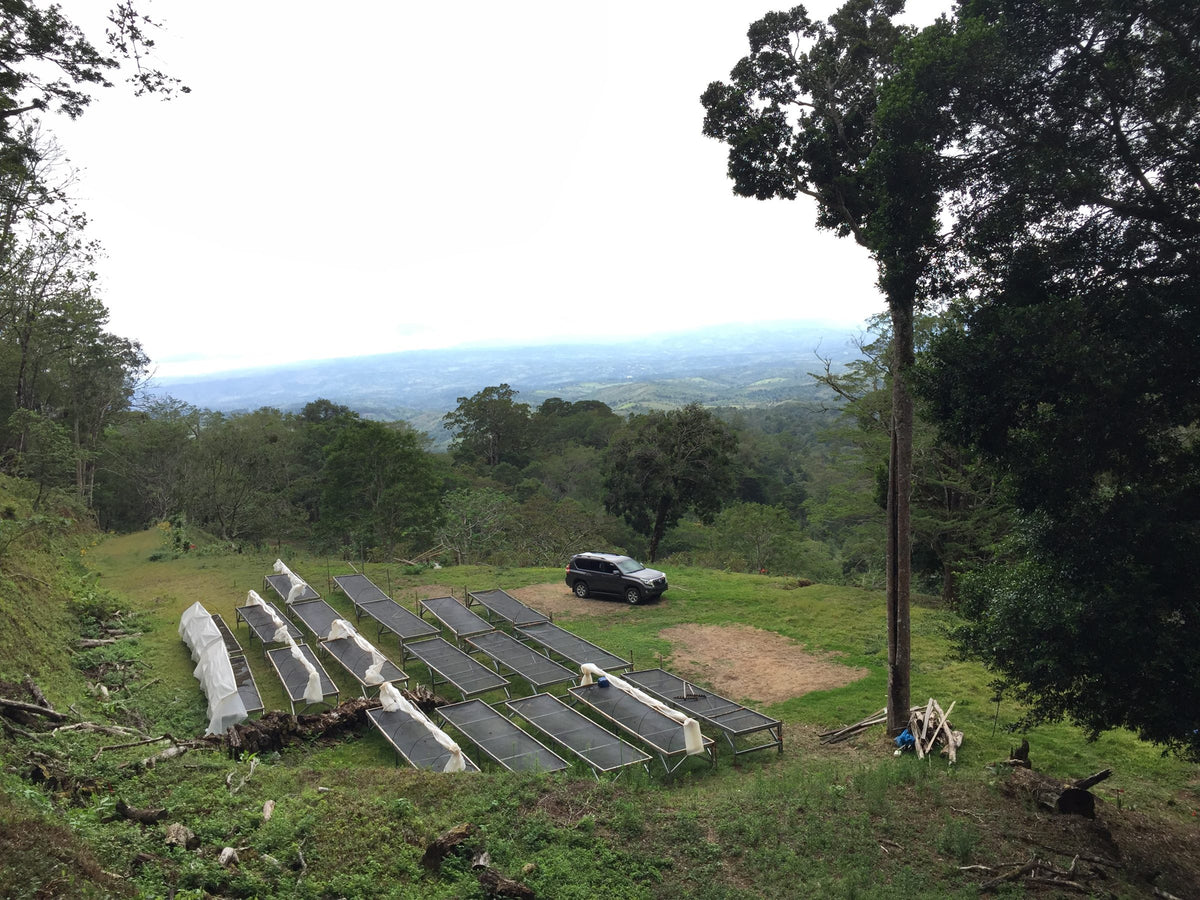
Raised drying beds on a grassy hillside at Finca Auromar with a long view over the valley and distant ridge under an overcast sky
Three young children standing by a stack of lumber at Finca Auromar while a white-faced capuchin monkey sits on the pile
A gray-haired man in a black T-shirt holding out a palm of ripe yellow and red cherries among coffee trees at Don Benjie Estate
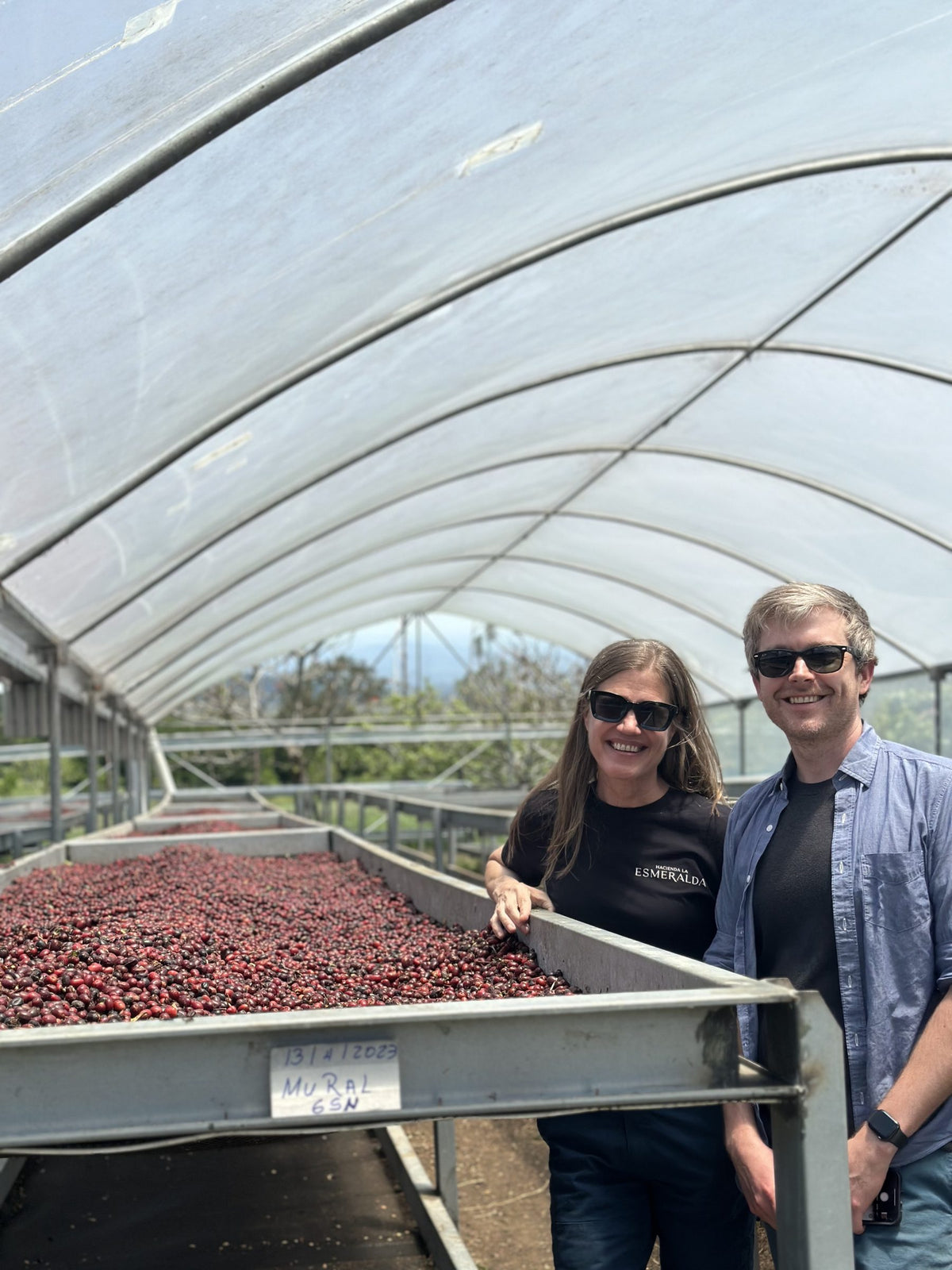
Two smiling people in sunglasses beside raised beds of drying natural coffee under a greenhouse at Hacienda La Esmeralda
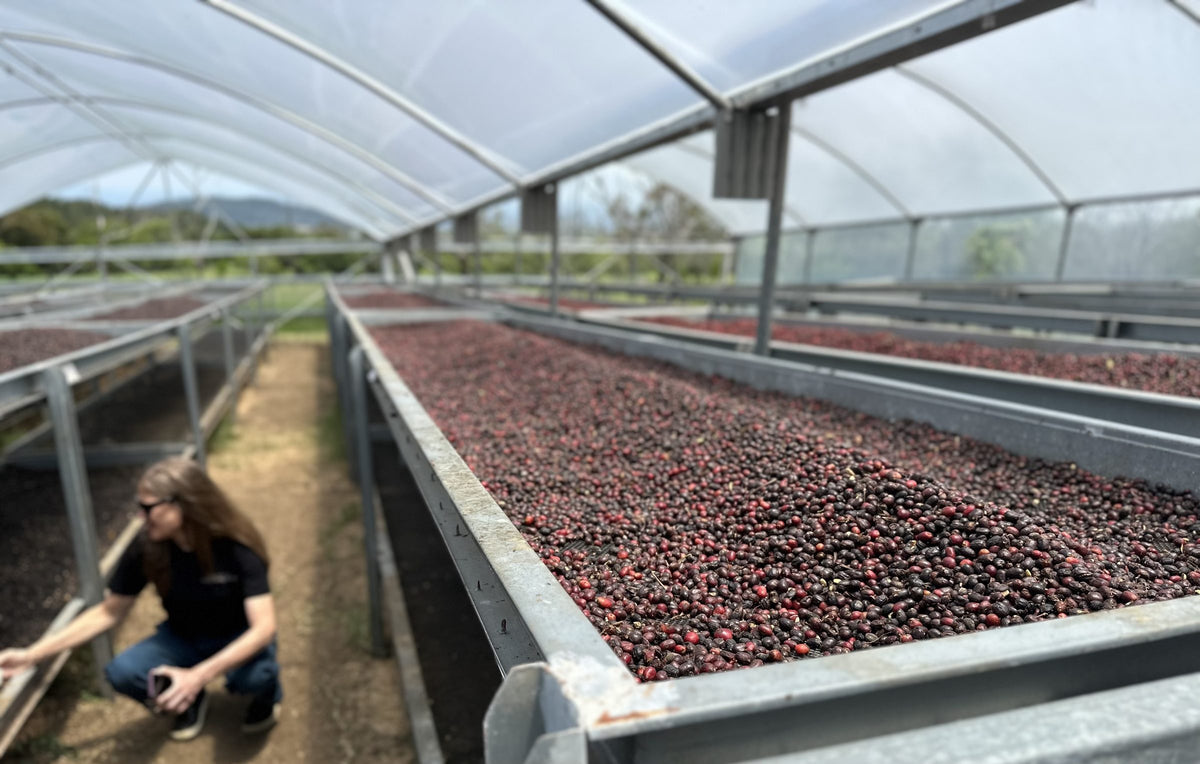
Long raised beds of red natural coffee drying in a greenhouse at Hacienda La Esmeralda, a worker crouched at the end
“In the mid-1990s, producers formed a specialty coffee association and launched Best of Panama, pursuing quality over volume.”Panama

About the land

Growing coffee in Panama

Panama’s highland Arabica grows mainly in Chiriquí, around Volcán Barú near the Costa Rican border. Its principal districts include Boquete, Volcán, Cerro Punta and Renacimiento. Farms range from about 700 meters to well above 2,000 meters, with volcanic, well-drained soils and cool mountain temperatures. The Pacific side has a dry season from roughly December to April and a rainy season from May to November.

Read moreShow less

Growers cultivate Typica, Bourbon, Caturra, Catuaí and other Arabica varieties, but Geisha is the variety most associated with Panama. Collected in Ethiopia in the 1930s, it reached Panama through a Central American research station in the 1960s. It produces little fruit, and some growers plant it at increasingly high elevations in pursuit of quality. Lower-lying areas in central and eastern Panama grow mostly Robusta.

Panama has one main harvest, beginning in lower areas as early as August to October and moving into the highlands around December. The highest farms often finish in February or March. Highland cherries are picked by hand. Rain, drought and cloud cover can shift the calendar and reduce yields.

A brief history

Organized coffee growing in Chiriquí dates to the 1890s, when settlers from the United States and Europe planted highland farms. Some local families trace their coffee roots further back.

Read moreShow less

After the international coffee quota system collapsed in 1989, falling prices brought years of crisis. In the mid-1990s, producers formed a specialty coffee association and launched Best of Panama, pursuing quality over volume. Geisha’s auction success in the mid-2000s helped expand that approach.

Coffee leaf rust, erratic rainfall and drought have since damaged harvests. The industry relies heavily on Indigenous Ngäbe harvest workers, while many Ngäbe-Buglé people also travel to Costa Rica for seasonal work. Development programs have begun supporting Indigenous farmers with agroforestry and climate-resilient farming.

From the journal

View all

Past releases