


Decaf SWP, Ethiopia
Natural Sidama- Maple Syrup
- Dried Berries
- Nougat
- Process
- Swiss Water Processed Decaf
- Variety
- Heirloom

We have roasted Ethiopian coffees for many years. Most of the Ethiopian coffees we’ve bought come from Sidama, Gedeo and Guji, south and east of the Great Rift Valley. Small farms here grow coffee under shade trees alongside other crops.
Our selections have included Oromia Bishan Wate, Ayla, Chelba, Sit’ota and a water-process decaf from Sidama, as well as Keramo and Bombe Natural. Together, these coffees connect our sourcing to smallholders, named producers and washing stations across the southern highlands.


The farms, families and cooperatives behind our Ethiopia coffees.
Our Oromia Bishan Wate comes from smallholders farming at 1,900 to 2,200 meters. Sit’ota comes from smallholders in Guji’s Uraga district, at 1,750 to 2,000 meters. Both are washed coffees, with the fruit removed before the seeds are dried.
Ayla comes from smallholders farming at 1,950 to 2,150 meters. Chelba comes from the Chelba washing station in the Bensa district, with producer Melaku Negash, at 1,850 to 2,100 meters. Washing stations are central mills where neighboring farmers bring their coffee cherries for processing.
Keramo comes from producer Faysel Abdosh and is grown at 2,035 to 2,250 meters. Like Ayla and Chelba, it is washed.
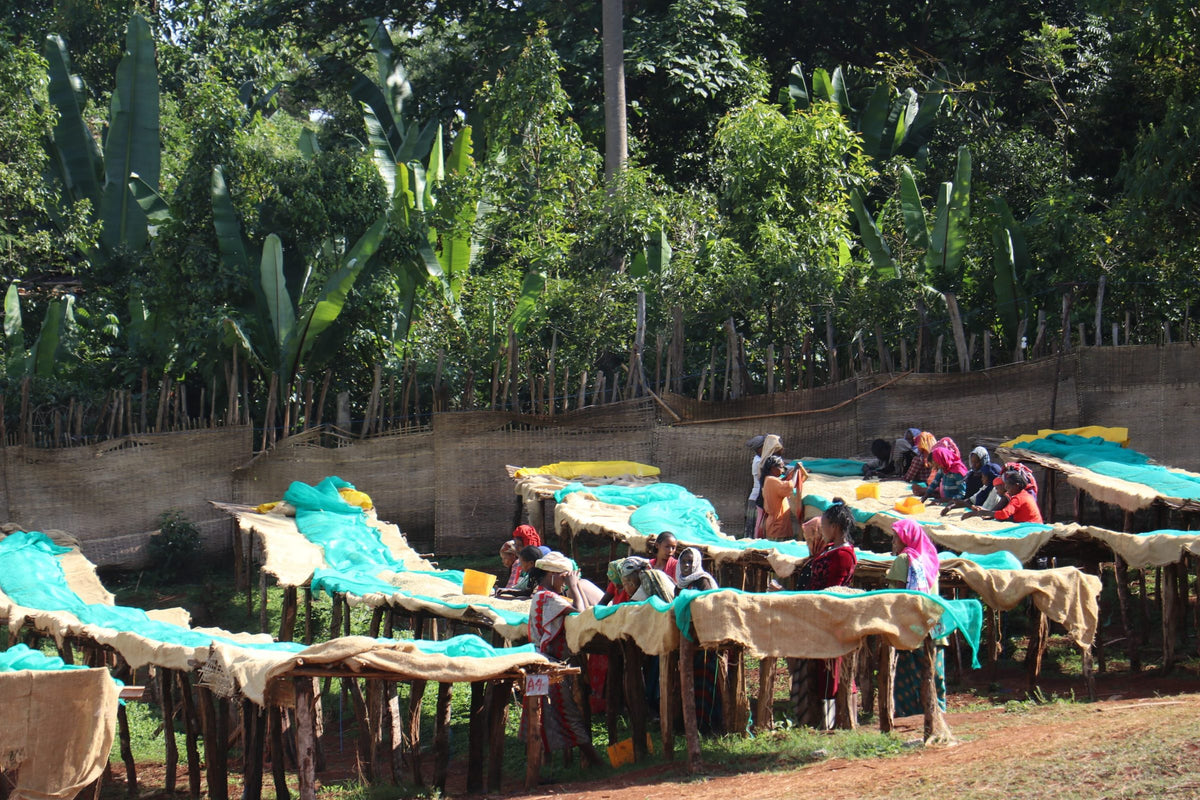
Our Bombe Natural came from local smallholders. Its hand-sorted cherries dry whole on raised beds for 15 to 18 days, covered during the hottest part of the day. Our Sidama decaf comes from producer Mesfin Girma and is decaffeinated using a water process.
Over the years, our Ethiopian lots have also included honey-processed coffees, which retain some fruit on the seed during drying, and experimental anaerobic and carbonic ferments.
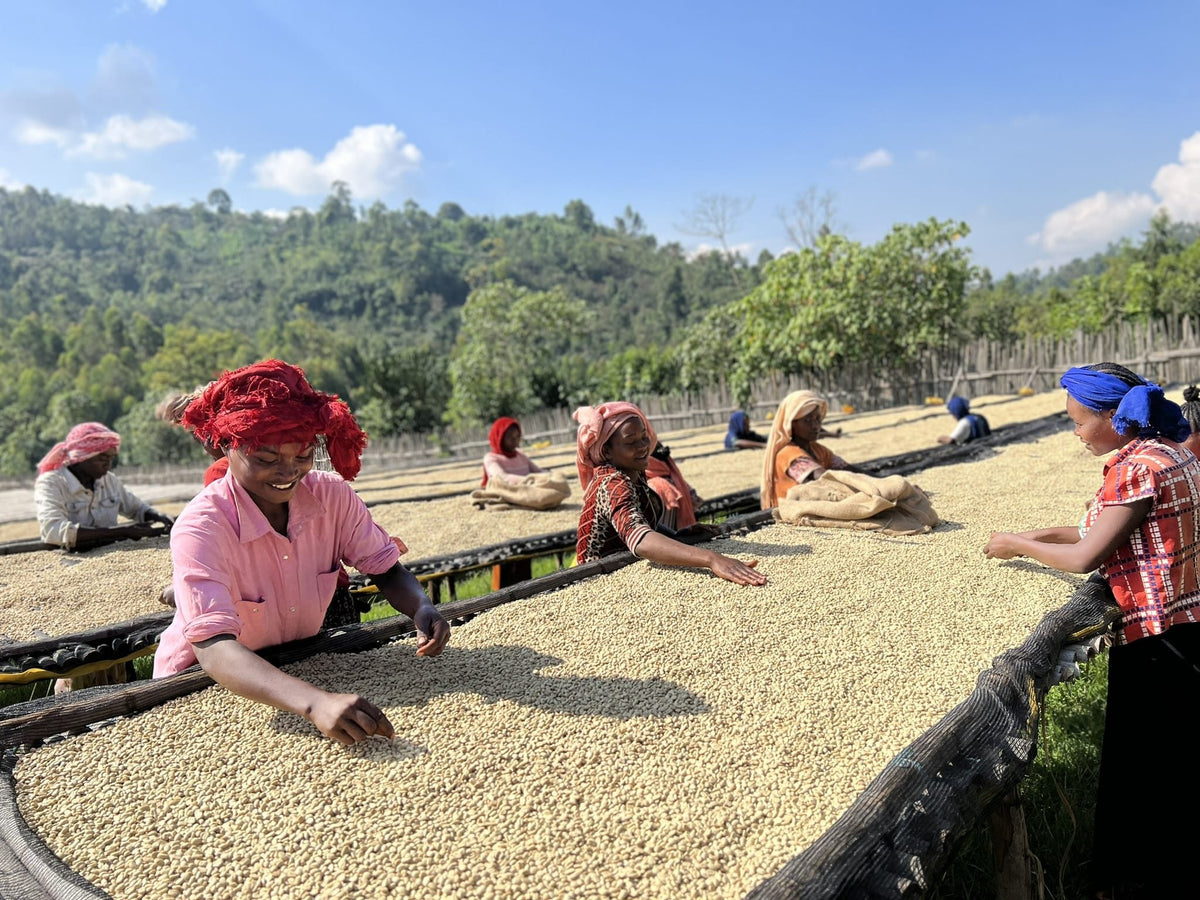
“Coffee has long been Ethiopia’s most important export and remains woven into daily life: roughly half the harvest is consumed at home.”Ethiopia
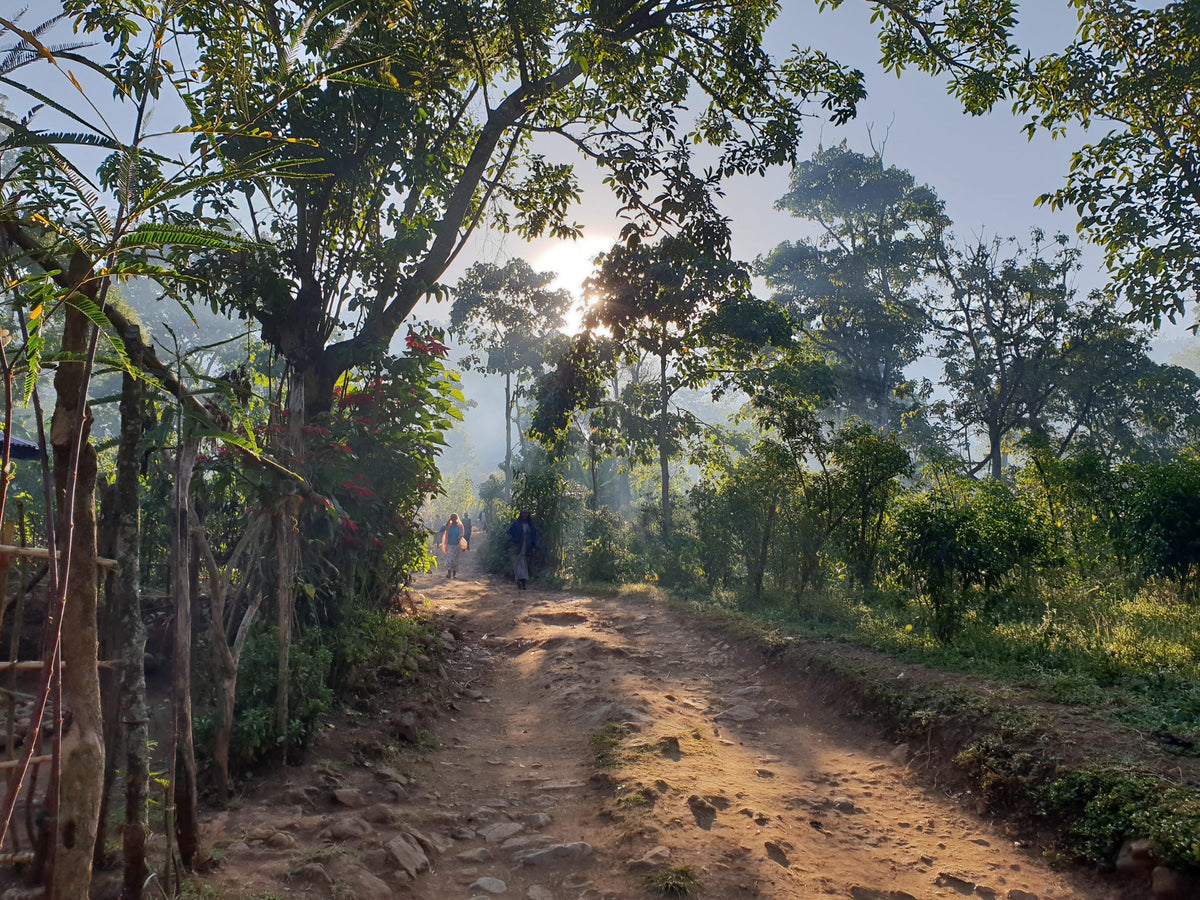
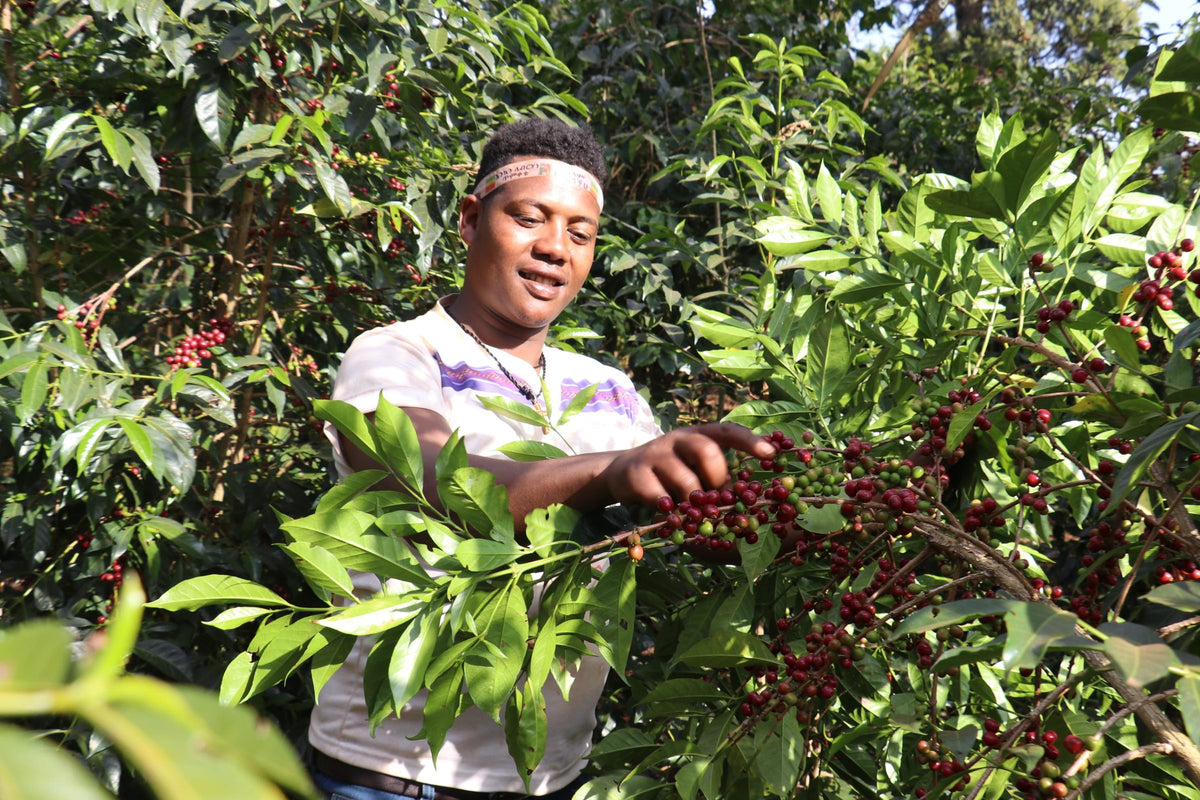
Arabica grows wild beneath Ethiopia’s forest canopy, making the country a storehouse of the species’ genetic diversity. Nearly all its coffee comes from smallholders working in forests, semi-forests and gardens around their homes. Garden coffee, grown alongside food crops, is the most common system; commercial estates supply only a small share.
Coffee grows mainly between 1,200 and 2,200 meters in the highlands on either side of the Great Rift Valley. The southwest is the wettest, most heavily forested growing area and produces more coffee than any other zone. In the drier east around Harar, coffee has traditionally grown in sunny gardens; production has declined, and some drought-hit farmers have switched crops.
Nearly all Ethiopian coffee is Arabica. Much comes from local landraces: diverse plants adapted to local conditions over generations. Researchers at Jimma have also developed improved varieties, including resistance to coffee berry disease.
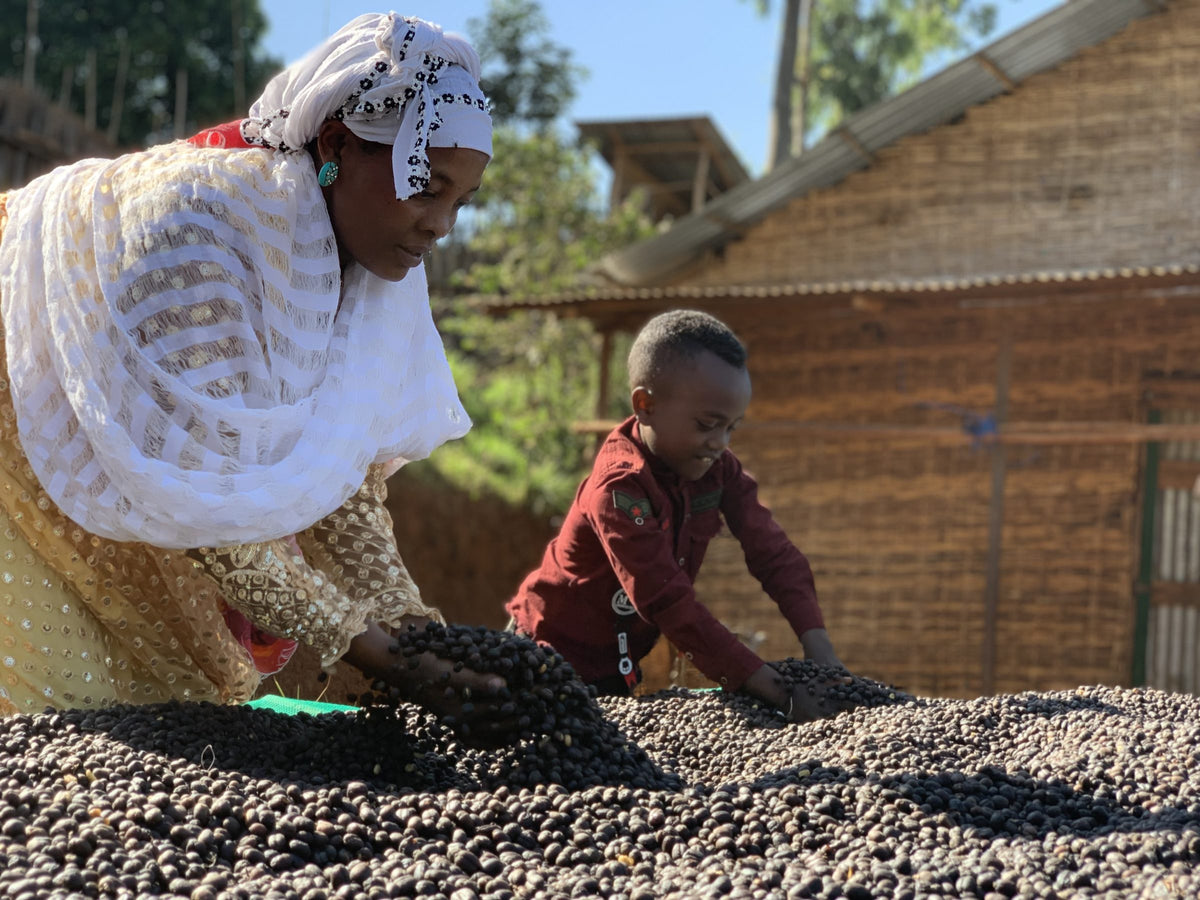
Most coffee is naturally processed, with whole cherries dried in the sun; roughly a third is washed. There is one main harvest, generally October through January, with timing varying by altitude and rainfall. New-crop coffees usually reach overseas drinkers in spring and summer.
Rising temperatures threaten lower growing areas, while farmers are already planting at higher elevations.
Coffee has long been Ethiopia’s most important export and remains woven into daily life: roughly half the harvest is consumed at home.
Coffee berry disease spread widely in the 1970s, prompting research into resistant varieties. After the 1974 revolution, the Derg government nationalized rural land and placed coffee marketing under state control. Smallholders remained central, with little security or incentive to invest.
Trade opened after the Derg fell in 1991, while land remained state-owned. Compulsory commodity-exchange trading introduced in 2008 obscured farm and washing-station origins. Reforms in 2017 restored direct export routes and traceability.
More recently, conflict and insecurity, particularly in western Oromia’s Wollega zones, have disrupted harvests and transport. Millions of small farmers remain at the heart of Ethiopian coffee.

Each year we release about 75 different Single Origin coffees. This means we are constantly sharing new and exciting options with you from around the globe! Recently we released four new...
Each year we release about 75 different Single Origin coffees. This means we are constantly sharing new and exciting options with you from around the globe! Recently we released four new...

Each year we celebrate and honor Black History Month by creating a cause coffee and donate proceeds to the Blue Heart Foundation. Black History Month is an annual celebration of...
Each year we celebrate and honor Black History Month by creating a cause coffee and donate proceeds to the Blue Heart Foundation. Black History Month is an annual celebration of...

04 FEB Jacob White, green coffee buyer for PT’s and Bird Rock Coffee Roasters, recently traveled to Ethiopia to source fresh crop lots as the harvest wraps up there. We...
04 FEB Jacob White, green coffee buyer for PT’s and Bird Rock Coffee Roasters, recently traveled to Ethiopia to source fresh crop lots as the harvest wraps up there. We...