A smiling man in a bucket hat sitting on a log under shade trees on the Volcán Azul farm
From the source

Costa Rica

Direct trade

Coffee grows in highland valleys and on mountain slopes across much of Costa Rica, from the Central Valley around San José to the mountains near the Panamanian border.

Altitude
600–1,900 m
Harvest
One harvest, many months
Key region
Los Santos (Tarrazú)
Varieties
Caturra, Catuaí, Villa Sarchí
With Bird Rock
For many years

Nothing from Costa Rica is roasting right now.

Who we buy from

The farms, families and cooperatives behind our Costa Rica coffees.

Volcán Azul

We have bought coffee from Alejo Castro and his family’s farm, Volcán Azul. Alejo is a fifth-generation producer whose family has about 200 years in coffee. Our purchases from Alejo have included small, separately harvested and processed lots of Gesha, Caturra and H1, grown at about 1,500 to 1,700 meters above sea level.

Read moreShow less

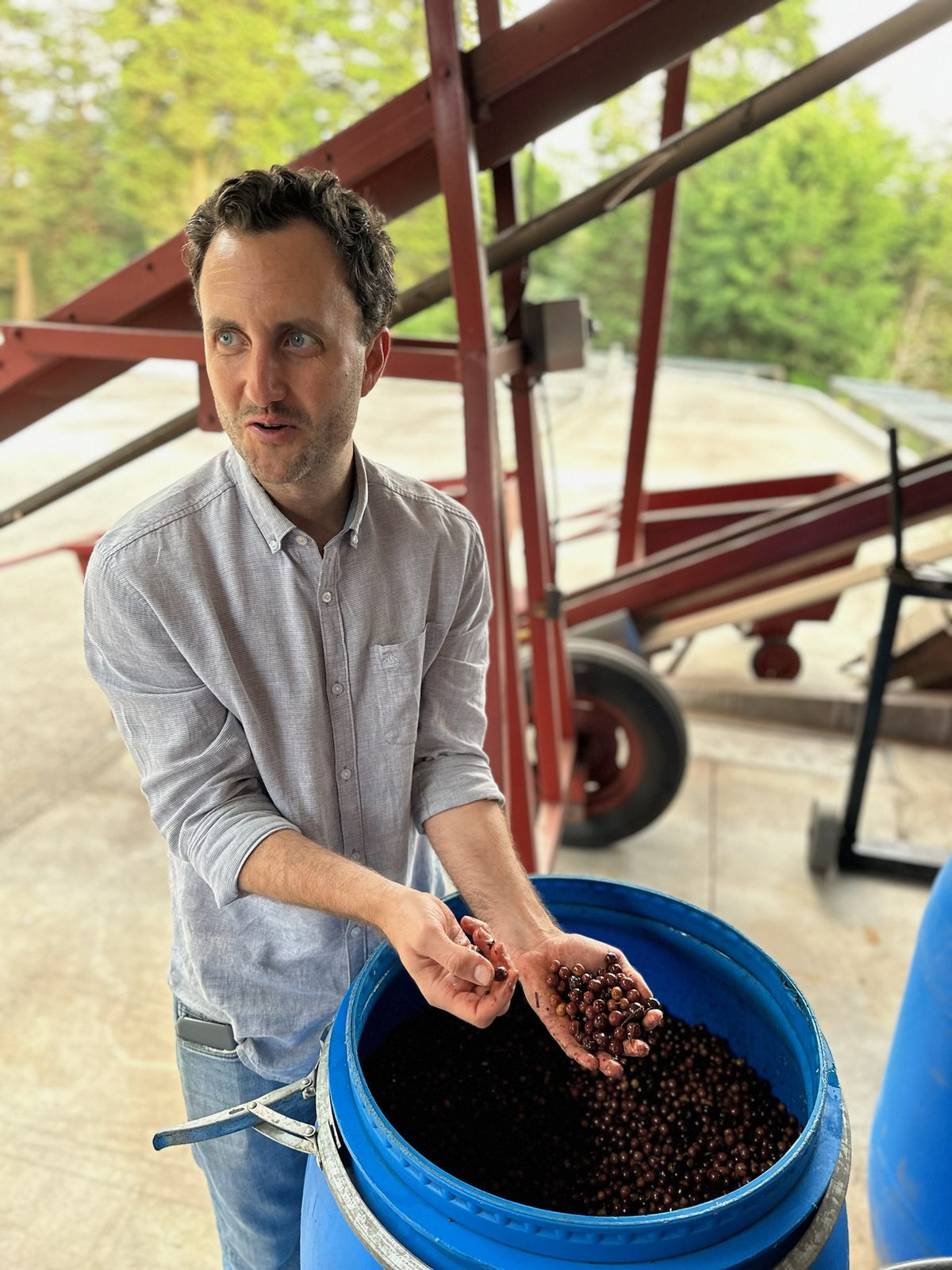
Processing is a distinctive part of Alejo’s work. He experiments widely, and more than half of the farm’s production uses unusual methods. All the lots we have bought from him have been naturals, meaning the coffee dried inside the whole cherry. Several were anaerobic naturals: the cherries first fermented in sealed tanks without oxygen before drying.

For one Gesha lot, that fermentation lasted five days, with temperature, acidity and sugar levels tracked throughout. The cherries then dried on raised beds. These small lots reflect the range of processing methods Alejo explores at Volcán Azul.

The family also says it has protected more than 1,500 hectares of rainforest, including land on the Osa Peninsula in southern Costa Rica.
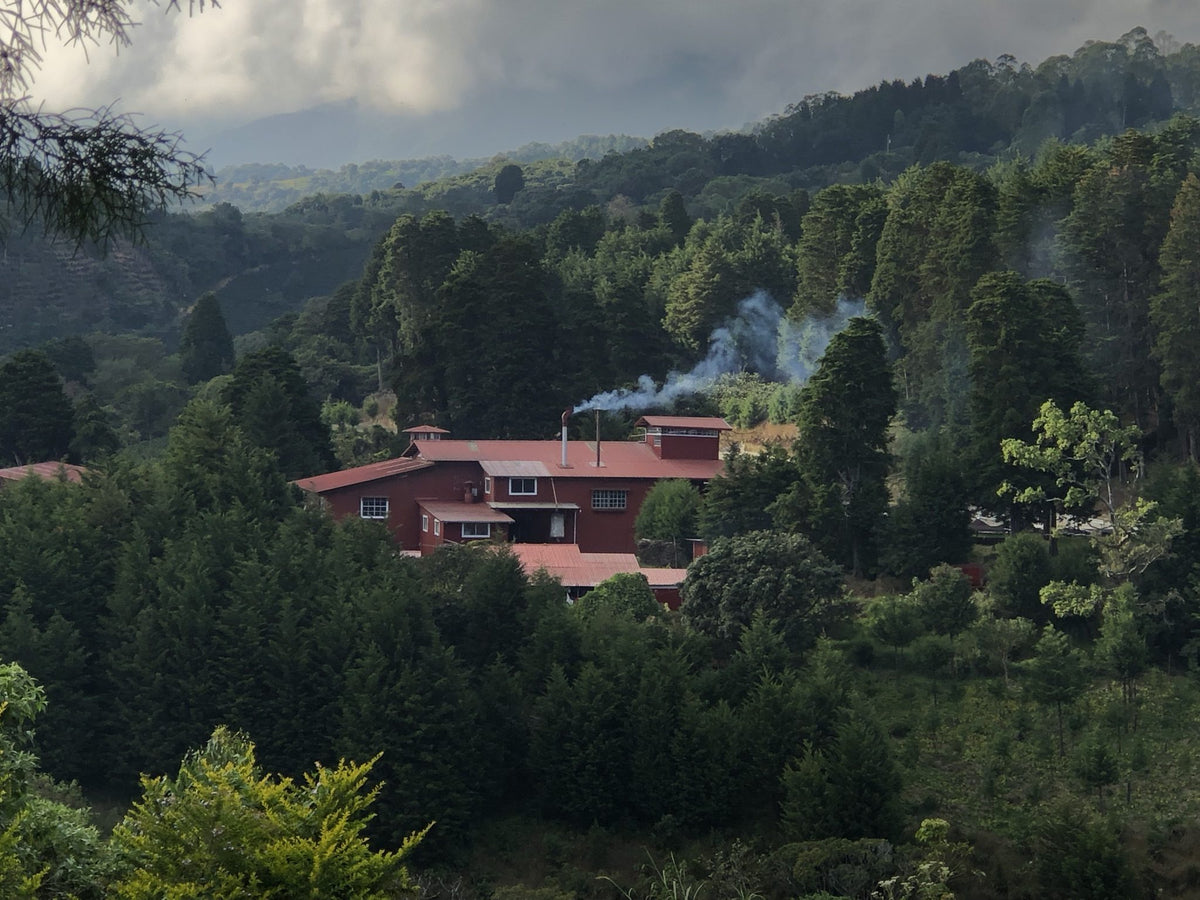
A red-roofed farmhouse with chimney smoke tucked into a misty, forested valley at Volcán Azul
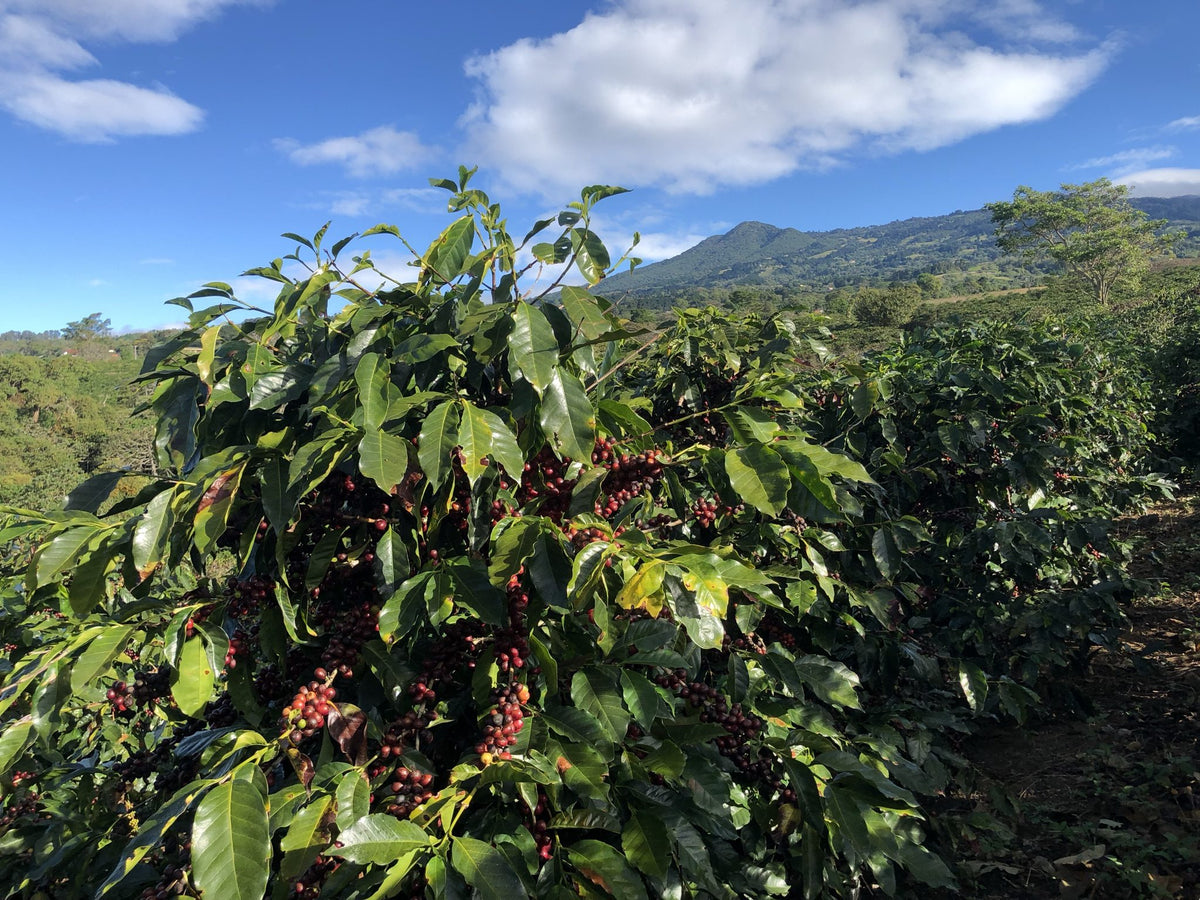
A coffee tree loaded with red cherries in the foreground at Volcán Azul, with volcano slopes and blue sky behind
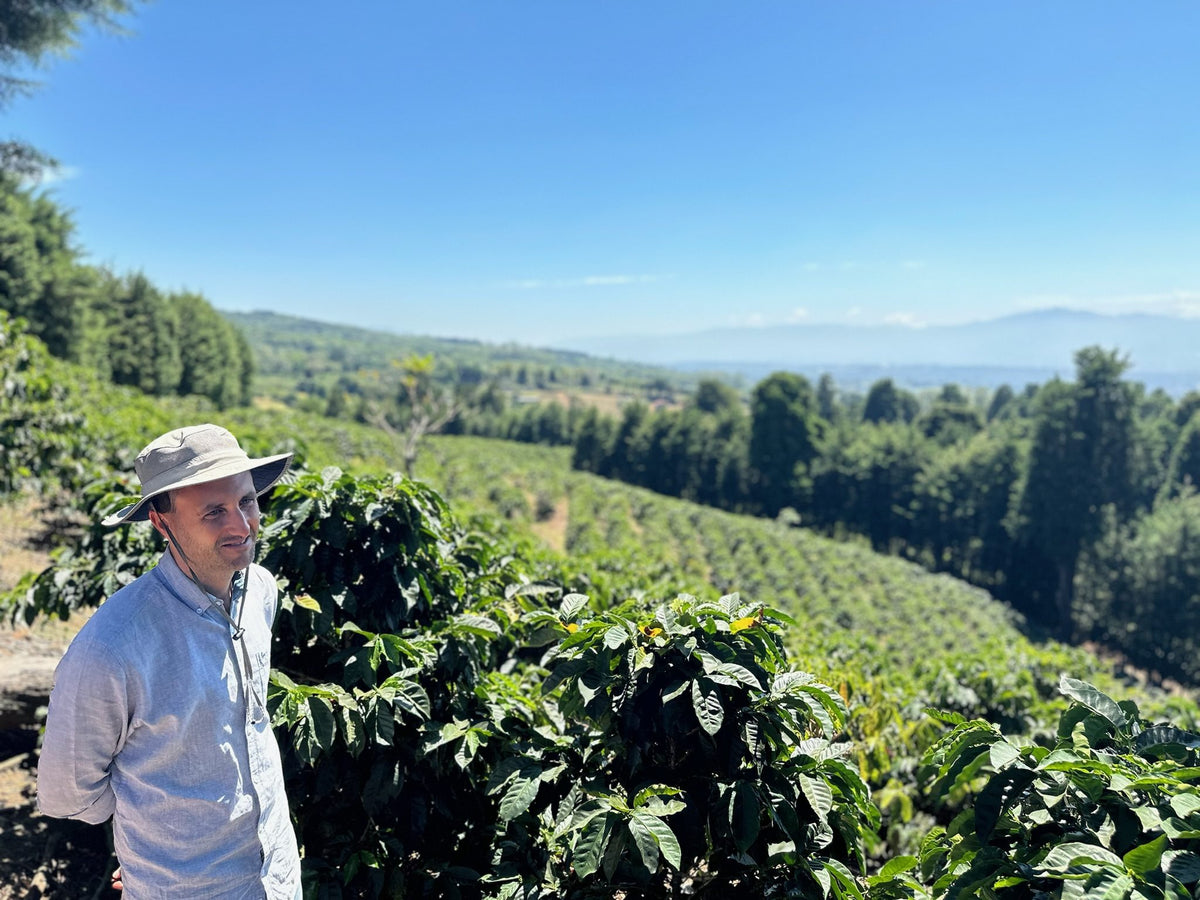
A man in a bucket hat standing beside coffee rows that roll down to a wide valley at Volcán Azul
A man holding a handful of dried natural coffee cherries from a blue barrel at the Volcán Azul mill
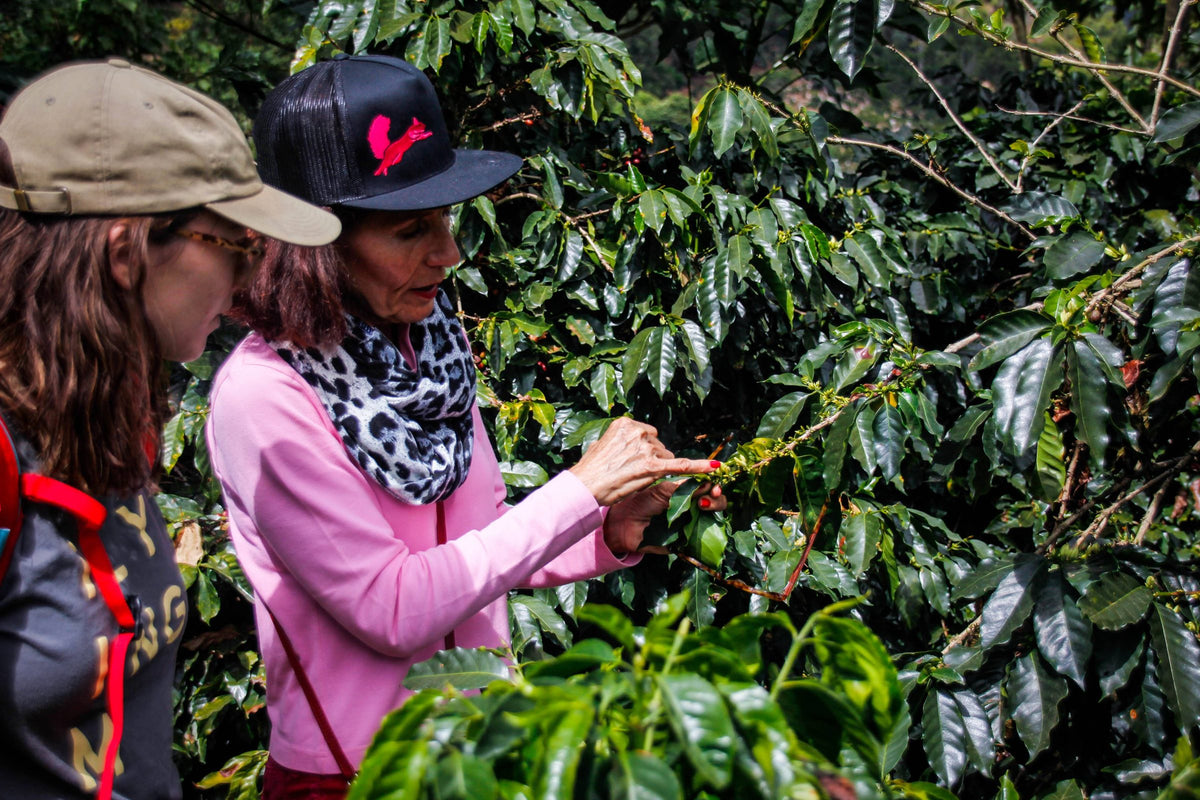
A woman in a pink shirt and cap examining cherries on a coffee branch with a visitor
“Since the early 2000s, family and community micromills have multiplied, allowing growers to process and sell their coffee as distinct lots.”Costa Rica

About the land

Growing coffee in Costa Rica

Coffee grows in highland valleys and on mountain slopes, from the Central Valley around San José to the mountains near Panama. Most farms lie between about 600 and 1,900 meters, with some in Los Santos reaching around 2,300 meters. Pacific regions have a distinct dry season followed by seasonal rains; the Caribbean slope is more humid.

Read moreShow less

Los Santos, long known abroad as Tarrazú, produces more than 40 percent of the national crop. Valle Occidental has fertile volcanic soils and is where the Villa Sarchí variety was discovered. In Valle Central, the country’s oldest coffee landscape, urban growth has replaced many farms.

Common varieties include Caturra, Catuaí and Villa Sarchí. Growers have also planted varieties bred to resist coffee leaf rust, including Obatá.

One annual harvest stretches across the regions and elevations. Picking can begin in July or August in lower, warmer areas; Los Santos harvests mainly from December into February. The highest farms may continue into March or later.

A brief history

Conflicts among growers, mills and exporters led to the creation of a public coffee institute in 1933. A 1961 law established reporting and pricing rules for mills and growers, a framework that still governs the industry.

Read moreShow less

From the 1950s through the 1980s, compact varieties and chemical inputs transformed farms, often alongside reduced shade. Later, falling prices, disease and urban expansion put pressure on growers and coffee land. Since the early 2000s, family and community micromills have multiplied, allowing growers to process and sell their coffee as distinct lots.

Harvesting depends on seasonal migrant workers. Nicaraguan workers once did much of this work; today many pickers are Ngäbe-Buglé people who cross from Panama each season. Erratic rain and labor shortages have contributed to crop losses.

From the journal