


Fazenda Terra Alta, Brazil
- Cocoa
- Candied Pecans
- Dried Fig
- Process
- Natural
- Variety
- IAC 125

No country grows more coffee than Brazil, which in recent seasons has produced well over a third of the world's coffee.


The farms, families and cooperatives behind our Brazil coffees.
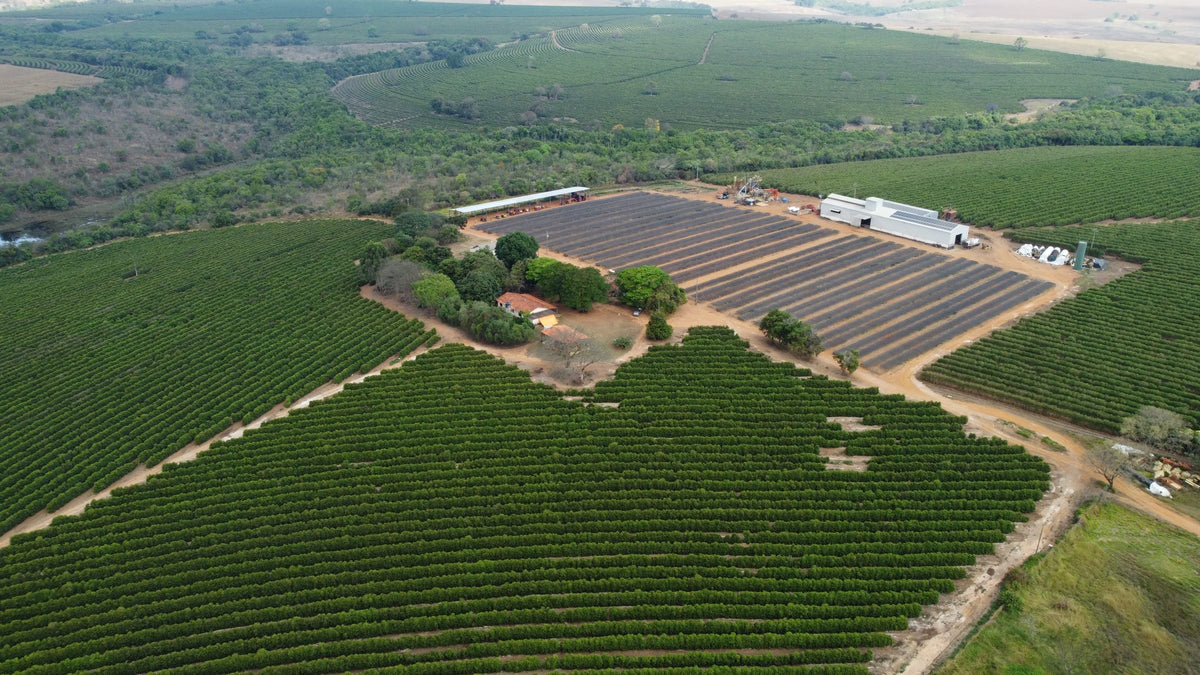
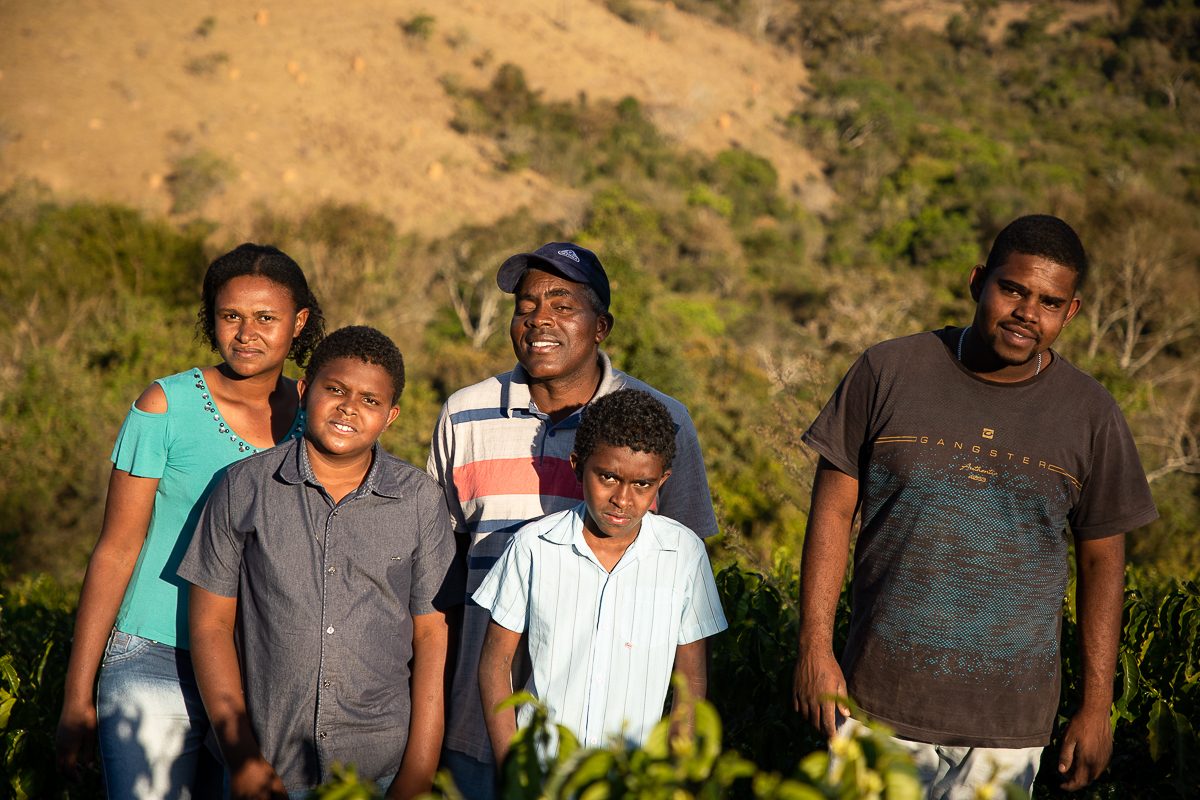
Our connection to Brazil includes Fazenda Terra Alta, near Ibiá in Minas Gerais. Its founders, Paulo and Juliana Piancastelli, built their own importing and exporting structure, allowing them to trade directly with us and retain control of their coffee through shipment.
Paulo and Juliana left corporate careers to establish the farm in 2010. They began planting in 2011 and brought in their first harvest in 2013. Today, they grow IAC 125 and Catuaí at elevations of 950 to 1,020 meters, with a harvest running from May to September.
We roasted Terra Alta Peaberry from the farm’s 2023 and 2024 crops. This natural-process IAC 125 micro-lot featured peaberries: small, rounded beans that develop when a coffee cherry contains one seed instead of the usual two.
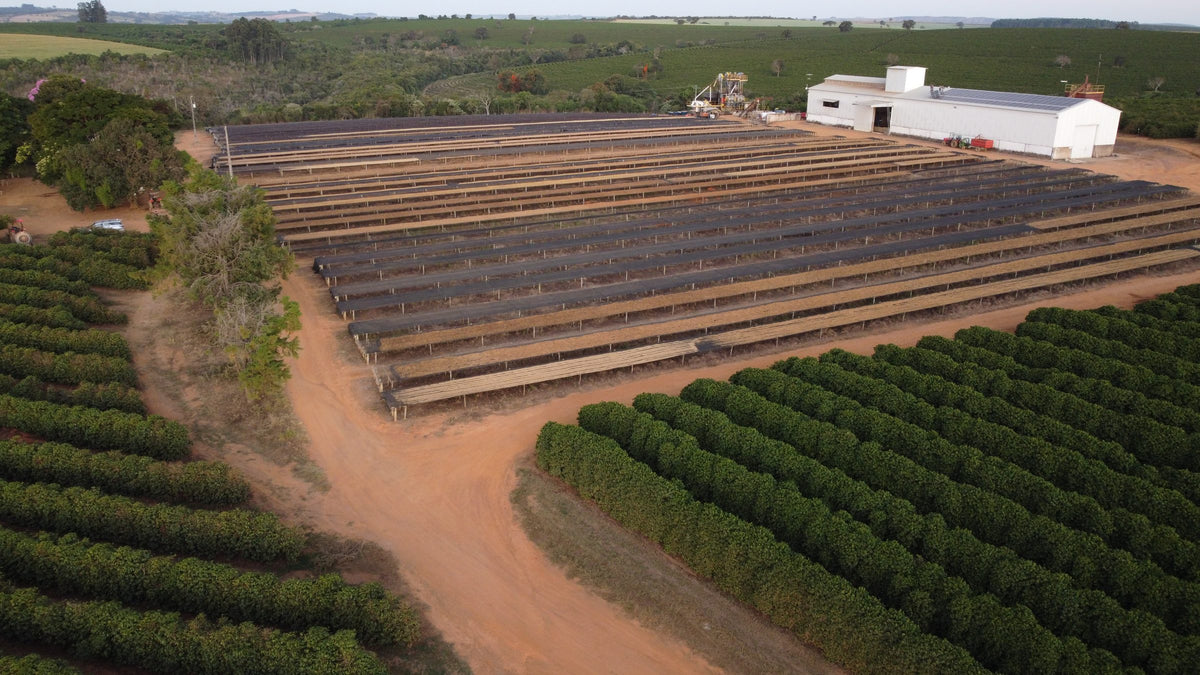
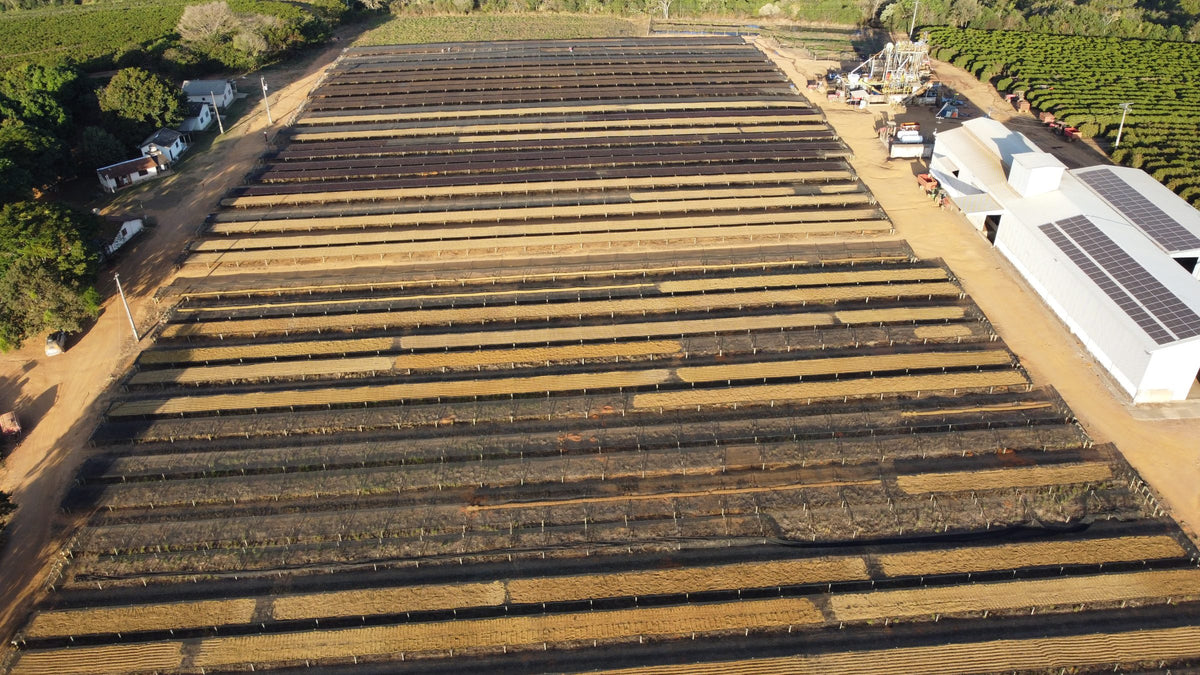
Terra Alta prepares both natural and pulped-natural coffees. Naturals dry whole in the cherry; pulped naturals dry with the skin removed and some fruit remaining on the bean. The farm uses raised beds and mechanical dryers.
Paulo and Juliana’s work also includes conservation and more efficient use of farm resources. Underground drip lines deliver water and nutrients with less waste, while electrostatic sprayers reduce pesticide use. Roughly 30% of the property is set aside for conservation and reforestation.
“Brazil grows more coffee than any other country, across landscapes ranging from high plateaus and steep mountains to warm lowlands.”Brazil
Brazil grows more coffee than any other country, across landscapes ranging from high plateaus and steep mountains to warm lowlands. Small growers work alongside large, highly technical estates. Both Arabica and Coffea canephora, known in Brazil as conilon, are grown on a large scale. Arabica favors the milder temperatures of plateaus and mountains; conilon tolerates warmer, lower areas.
Minas Gerais is the heart of Brazilian Arabica. Cerrado Mineiro is a savanna plateau with humid summers and dry winters. Sul de Minas and Matas de Minas include mountainous, family-farmed areas where steep slopes mean much of the harvest is picked by hand.
São Paulo grows Arabica on plateaus, while Espírito Santo leads conilon production and also grows Arabica in its cooler highlands. Bahia produces both species, and Rondônia’s growers produce canephora sold as “Robustas Amazônicos.”
Mundo Novo and Catuaí are widely planted Arabica varieties. Newer varieties bred to resist coffee leaf rust grow alongside them, although most plantings remain susceptible to the disease.
Flowering usually follows the first spring rains between September and November. Cherries develop through the rainy summer and ripen as conditions turn cooler and drier. Conilon harvesting begins around April; Arabica picking generally runs from May through September, sometimes continuing into October in cooler mountains.
Coffee once dominated Brazil’s economy, with São Paulo at its center in the early twentieth century. After the 1929 crash, the government bought and destroyed tens of millions of bags over the following decade and a half to support prices. Researchers in Campinas also began breeding work that would reshape Brazilian coffee.
The 1970s changed where and how coffee grew. Coffee leaf rust prompted extensive replanting. Then, on July 18, 1975, a “black frost” killed hundreds of millions of trees in Paraná. Many farmers switched to soy and grain, and rural families left the land. Coffee production shifted especially toward Minas Gerais and Cerrado Mineiro.
International export quotas ended in 1989, followed by the closure of Brazil’s federal coffee institute in 1990. Farmers, cooperatives and exporters entered an open market. Since then, Brazil has increased yields, expanded conilon production and developed its own specialty coffee sector.